

Categories
7FA
Borescope
Non Destructive Testing
Secure Multi Party Computation
The Compiler
Uncategorized
Book Your
Consultation
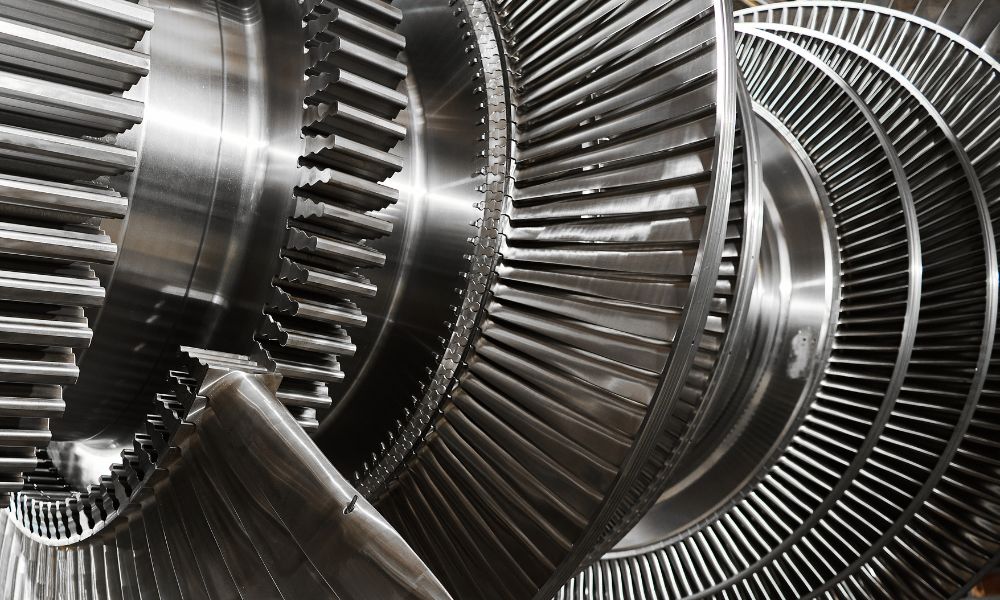
There are different reasons to use a Nondestructive Evaluation. Since proper maintenance is an asset to many companies with large, expensive machinery, it’s important to understand a few of the different techniques. These are five techniques for Nondestructive Evaluations.
Nondestructive Evaluation and Nondestructive Testing
These two common terms refer to testing materials without destroying them. Nondestructive Testing (NDT) is the most standard phrase in the industry, but you may be familiar with a few others. Nondestructive Evaluation (NDE) and Nondestructive Inspection (NDI) are two other phrases you will commonly encounter.
Ultrasonic Testing
This technique involves transmitting high-frequency sound waves into a material. It identifies changes in a material’s properties. One of the most common is known as pulse echo.
Inspectors can find any imperfections by measuring the sound reflections. A few other types of this testing include Time-of-Flight Diffraction (TOFD), Phased Array Ultrasonic Testing (PAUT), and Automated Ultrasonic Testing (AUT).
Magnetic Particle Inspection
Magnetic Particle Nondestructive Testing is a mouthful of a name. Magnetic fields disrupt the flow, allowing inspectors to identify the flaws in the material. The material is incredibly susceptible to magnetization. The surface becomes covered in ion particles that expose disruptions in the magnetic field flow. Now, visible indicators lead inspectors to the flaws.
Visual Testing
Visual Testing is exactly what it sounds like, and it’s the most basic way for inspectors to find flaws. Individuals will visually examine an object or material with flashlights because extra light adds depth to the inspection. Some inspectors use Remote Visual Inspection (RVI) tools, such as inspection cameras. A robot, drone, or rope can move and place the camera.
Dye Penetrant Testing (PT)
During a Penetrant Test, inspectors coat testing material in a solution containing fluorescent or visible dye. They remove the excess solution to allow the mixture to highlight any breaks in the material. Inspectors utilize a developer to draw out the resolution of the deficiencies. Then, a UV light will show the shortcomings. A contrast between the developer and penetrant will appear in color with regular dyes.
These five nondestructive evaluation techniques require professionals. Turn to Advanced Turbine Support to provide the best turbine inspection services. Our reputation precedes us, and you can rest assured you’re in the best hands.
Eddy Current Testing
Eddy Current Testing uses electromagnetic induction to detect surface and near-surface defects in conductive materials. Inspectors introduce an alternating current into a probe, which creates eddy currents within the material being tested. When those currents encounter cracks, corrosion, or changes in material properties, the electrical response is altered. These changes are displayed on specialized equipment, allowing inspectors to identify flaws without damaging the component. Eddy Current Testing is especially effective for inspecting tubing, fasteners, and turbine components where precision and speed are critical.
Next Posts
Surface Crack Detection with Visible Dye Penetrants
admin March 13, 2026
Importance of Borescope Inspections During Gas Turbine Outages
admin March 6, 2026
Borescope Strategies for Combined-Cycle Plants
admin February 28, 2026