
Categories
7FA
Borescope
Gas Turbine Inspection
Non Destructive Testing
Secure Multi Party Computation
The Compiler
Uncategorized
Book Your
Consultation
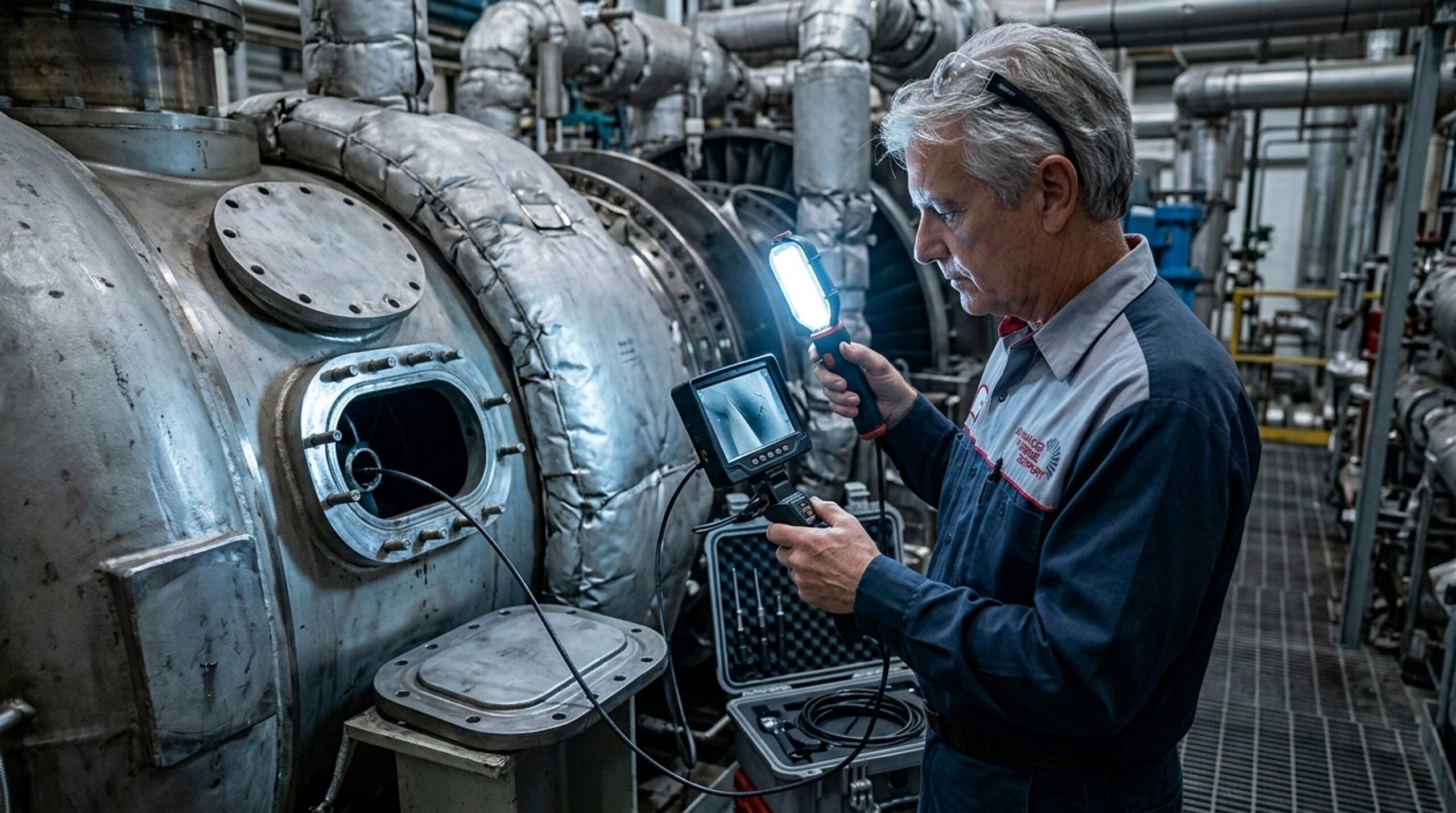
A crack at the blade root, a shifted shim two rows downstream, a pit that looks cosmetic but isn’t: a GE 7EA compressor tells the truth to whoever knows how to read it. That is the entire premise behind a proper GE 7EA borescope inspection, and it’s why a visual pass alone, without checking findings against documented failure history, leaves too much on the table.
Operators should look for rotor blade cracking, foreign object damage, erosion, corrosion pitting, coating loss, and rub or clash marks between rotor and stator rows. Every finding should be mapped to a stage and location, then checked against known GE Technical Information Letters before deciding whether to repair, monitor, or escalate.
That last step, checking findings against documented failure history, is where most in-house inspections fall short. Our borescope inspection services are built around exactly that gap. We read images with the specific 7EA compressor failure library in mind, not just checking a box that says “no damage found.” This article walks through the failure modes, the relevant TILs, and the documentation standard that separates a useful inspection from a rushed one.
Key Takeaways
- A proper GE 7EA borescope inspection should confirm the condition of every compressor stage, from inlet guide vanes through the discharge rows, checking specifically for cracking, FOD, erosion, corrosion pitting, and coating loss
- Inspection frequency should be tied to fired hours and starts, but units running cycling duty need shorter intervals than the OEM’s baseload assumptions allow
- GE Technical Information Letters exist because certain 7EA compressor failure patterns repeat across the fleet, so an unchecked finding is a guess, not a diagnosis
- Moving from monitor to repair to major inspection should depend on severity grading and trend data across multiple outages, not a single borescope pass
Why Compressor Borescope Inspection Matters for 7EA Fleets
A forced outage on a 7EA gas turbine rarely stays contained to the compressor. Debris from a cracked rotor blade or a moved shim travels downstream through the flow path. What started as a low-cost blend repair can turn into damage across the hot gas path and even the exhaust section. For an independent power producer, that difference matters. IPPs typically operate on tighter margins than regulated utilities, so an unplanned outage costs lost generation revenue at a moment the plant cannot recover.
The Cost of a Missed Finding
Field history backs this up directly. In one documented case, workers pulled out a moving 7EA S-12 shim before it caused downstream clashing, saving the owner more than $400,000 compared to what a full disassembly and repair would have cost. Catch the shim early, spend a fraction of what a later repair would demand.
Cycling Duty and Faster Wear in Aging 7EA Fleets
Many 7EA units built for baseload service now run cycling duty because of how power markets have shifted. That change speeds up wear in ways the original inspection intervals were never designed to handle. The same logic applies to 7FA fleets, where bucket damage left unaddressed has turned into long, costly downtime. Turbine components expected to last through a full major inspection interval start showing wear earlier when starts and stops replace steady running, which is exactly the risk a careful borescope inspection is meant to catch before it becomes a shutdown nobody planned for.
If your unit’s duty cycle has shifted in the last few years, it’s worth a quick conversation about whether your inspection interval has kept pace with it.
Inspection Scope, Equipment, and Turbine Maintenance Procedure
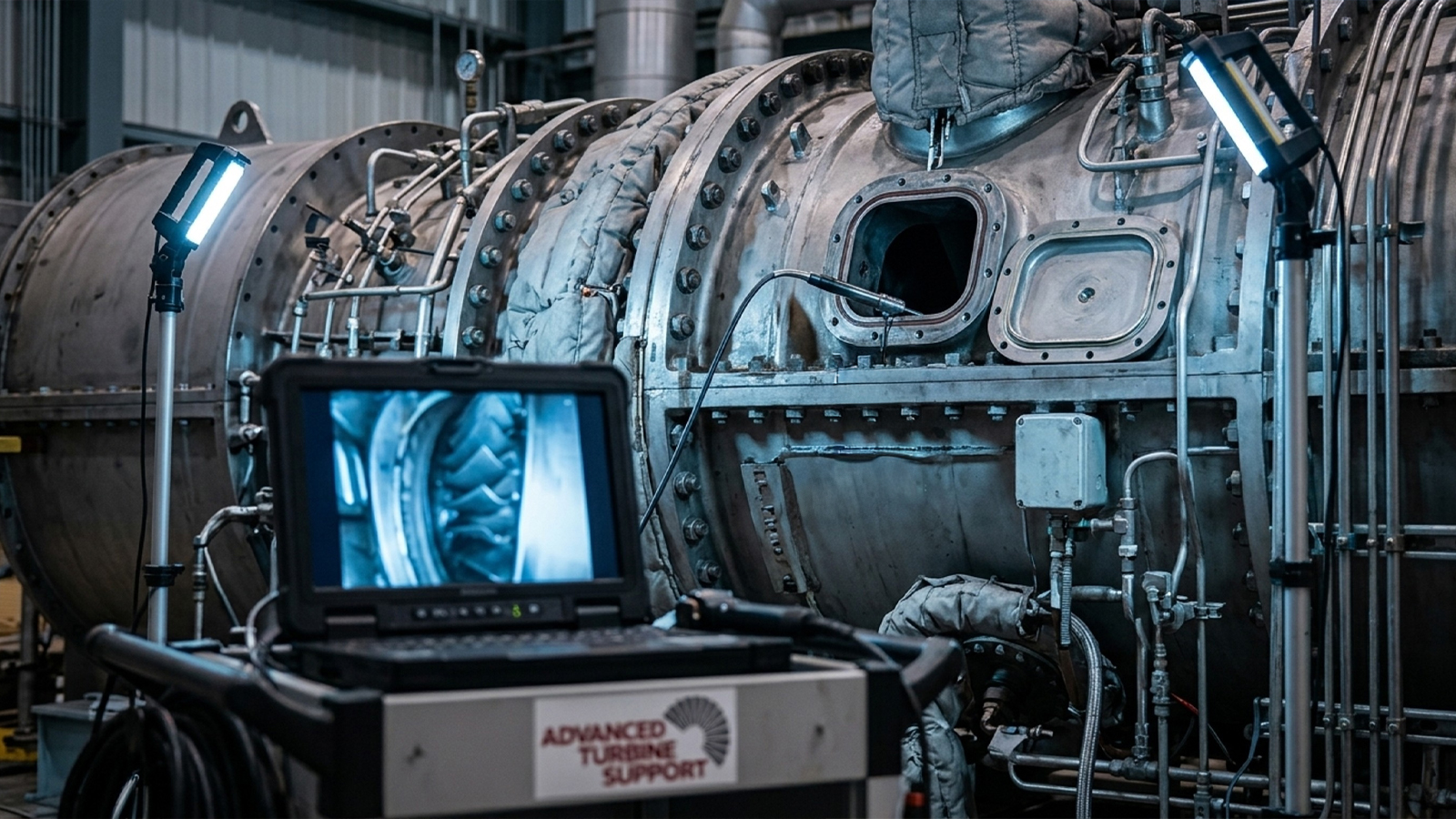
A complete 7EA compressor borescope inspection covers the flow path from the inlet guide vanes through the last compressor stage. Where casing access ports allow, it extends into the combustion nozzle area and transition pieces connecting to the turbine section. Technicians work stage by stage, comparing rotor and stator rows against known wear patterns rather than looking at each image alone.
Stages and Access Points Inspected
- Inlet guide vanes and first-stage rotor blades, where FOD and bushing wear are most commonly found
- Mid-compressor stages, where corrosion pitting and coating loss typically progress
- Aft compressor stages and the discharge casing, where clashing and shim-related damage tend to show up
- Combustion nozzle and transition piece areas, when access ports and outage scope allow a closer look
The main tool is an articulating video probe, often paired with rigid borescopes for shorter, straight-line access ports. When a visual inspection turns up a fine crack line, Nondestructive Examination methods, including dye penetrant, may be used to confirm depth and extent. This layered approach mirrors the documentation discipline found in broader pressure-equipment standards like API 572.
How Often Should a GE 7EA Compressor Be Borescope Inspected?
GE ties inspection timing to fired hours and starts rather than a fixed calendar. A unit running steady baseload duty may safely wait longer between inspections than a unit cycling daily, since cycling speeds up the fatigue behind blade cracking and clashing.
| Duty Type | Typical Inspection Approach | Key Driver |
|---|---|---|
| Baseload | Annual inspection as floor | Fired hours accumulate steadily |
| Moderate cycling | Semi-annual look/see plus deeper annual check | Rising start counts |
| Heavy cycling | Shortened intervals, condition-based | Fatigue from frequent start-stop stress |

Common Failure Modes: Blade Cracking, FOD, Erosion, Corrosion, and More
Blade Cracking (HCF/LCF)
Rotor blade cracking on 7EA compressors generally traces back to high-cycle fatigue, driven by vibration stress at natural frequencies, or low-cycle fatigue, driven by repeated startup and shutdown stress cycles. Cracks often start at the blade root or trailing edge and can stay nearly invisible in early stages, since a fine crack may show no discoloration and no nearby rub marks at all. A technician unfamiliar with the specific failure pattern can miss a crack that would be flagged right away by someone who has seen it before on a similar rotor.
Foreign Object Damage (FOD) and Erosion
Foreign object damage typically comes from debris pulled in at the inlet, failed IGV hardware breaking loose into the flow path, or loose fasteners left over from an earlier repair. Compressor blade erosion develops slowly from particles moving through the engine over thousands of operating hours, thinning leading edges and changing airfoil shape before it ever threatens structural strength. That same eroded debris can also travel downstream, occasionally partially obstructing a cooling hole on a nozzle or bucket and reducing internal air cooling.
Corrosion Pitting, Coating Loss, and Loose Hardware
Corrosion pitting shows up as small, separate pits on rotor blades and stator vanes, often near cooling holes or areas where coating has worn thin. Left alone, pitting becomes a stress point that speeds up cracking. Discoloration around a pit or blade tip is often an early sign that coating breakdown has already started. Rub damage between rotor blades and the casing, along with loose hardware such as a shifted shim, rounds out the list of findings that need real documentation rather than a passing note of “minor wear.”
GE Technical Information Letters (TILs) Relevant to 7EA Compressor Borescope Findings
What Is a GE Technical Information Letter (TIL)?
A GE Technical Information Letter is an advisory from the manufacturer that documents a known failure pattern seen across the fleet and recommends inspection, repair, or design changes in response. TILs exist because GE Power Services and its earlier organizations track failures across thousands of operating turbine units. When a pattern repeats often enough to be predictable, it gets written down as formal guidance rather than left to each plant’s own judgment.
TIL Categories That Show Up in Compressor Borescope Findings
Several categories of 7EA-specific compressor issues have led to OEM technical letters over the years. Recognizing the pattern matters more than memorizing a bulletin number:
- IGV spring and thrust washer wear, which can lead to bushing wear and eventually FOD if left unaddressed
- Shim movement at aft compressor stages, where a shifted retention shim travels downstream and causes clashing across multiple rotor and stator rows
- R2/R3 tip loss patterns, where blade tip material erodes or breaks in a recognizable, repeated way
- S1 stator vane suction-side cracking, which requires close attention to trailing edges during visual inspection
- Hook-fit wear at aft stator stages, which can add to casing distortion over time if not monitored
When a borescope finding matches one of these categories, it changes how the finding should be treated. A crack that fits a known TIL pattern is a fleet-wide condition with a documented response, and the unit’s history of unplanned shutdowns should be reviewed alongside the image itself. The 7EA Users Group and industry publications like Combined Cycle Journal regularly revisit TIL updates as the installed fleet ages, keeping this a living body of knowledge rather than a fixed reference list.
Borescope Findings: What Operators Should Document, Grade, and Escalate
Documentation and Severity Grading Checklist
A useful inspection report does more than confirm damage exists. It should include:
- A photo at every stage and location where a finding occurs, labeled by row and clock position
- Consistent stage/location mapping so the same reference points are used outage after outage
- A severity grade for each finding, using a defined scale rather than loose terms like “looks okay”
- A direct comparison against the prior outage’s findings to see whether damage is stable or growing
- A recommended action for each finding: monitor, repair, or send for engineering review
Repair, Monitor, or Replace: The Escalation Decision
Not every finding calls for the same response. A shallow corrosion pit with no growth across two outages may simply need monitoring. A crack that matches a known TIL location, or damage found near combustion nozzle rows and bucket platforms downstream, usually needs OEM engineering review before the unit goes back into service. When findings pile up across multiple stages, or casing distortion comes along with blade damage, that combination is usually the trigger for a full major inspection rather than a targeted blend repair. Turbine health should be judged on the direction findings are heading across outages, not on the appearance of any single borescope pass.

Why Professional Diagnostics Matter for IPP Operators
Experience That Reads Findings Against Real Failure History
Reading a borescope image correctly takes more than access to the equipment. We built our approach around years of hands-on experience across 7EA and 7FA compressor sections, as well as the turbine sections those compressors feed. Findings get checked against real failure history rather than guessed at on their own. That experience shows up directly in the reporting we deliver: mapped by stage, backed by photos, and graded so a plant manager can make a repair or monitor decision without turning vague notes into an engineering judgment call later.
Scheduling Fast Enough to Match Your Outage Window
Fast scheduling matters just as much as accuracy. IPPs operating under market-driven cycling often have narrow outage windows. A borescope inspection team that cannot show up quickly forces a choice between delaying the outage or running with an incomplete look. We treat quick scheduling as part of the diagnostic service itself, not an afterthought. A technically sound inspection delivered too late to shape outage planning has limited value to an operator working against a hard return-to-service date.
If you’re mapping out an outage window and want to know whether it lines up with our availability, a short call is usually enough to figure that out.
Conclusion
There is a real gap between “we did a borescope look” and “we know exactly what we’re dealing with,” and that gap is usually what decides whether next quarter’s outage is planned on your terms or forced on the plant’s schedule. Cracking, FOD, erosion, corrosion pitting, shim movement, and clashing all leave recognizable signatures, and matching them against documented TIL history is what turns a photo set into a decision. If your next outage window includes a compressor inspection, get it read by people who know what a 7EA-specific failure looks like before it becomes obvious to everyone else. Call (352) 332-4061 or schedule a consultation with Advanced Turbine Support before your outage window closes.
FAQ
How often should a GE 7EA compressor be borescope inspected?
Inspection frequency tracks fired hours and starts rather than a fixed calendar date. Units in cycling duty typically need shorter intervals than baseload units, because start-stop cycles speed up fatigue-driven failures. Many operators now schedule a semi-annual look/see alongside a deeper annual inspection, and getting the exact interval right for your unit’s duty cycle is worth a direct conversation with an experienced provider.
What are the most common failure modes in GE 7EA compressor blades?
Blade cracking, foreign object damage, erosion, and corrosion pitting are the main failure modes seen in 7EA compressor blades. Each has its own visual signature and typical location, and telling early-stage damage apart from cosmetic wear takes trained eyes that know the specific patterns this fleet produces.
What is a GE Technical Information Letter (TIL) and why does it matter for borescope findings?
A GE Technical Information Letter is an OEM advisory that documents a known failure pattern seen across the fleet, along with recommended inspection or repair action. It matters for borescope findings because a defect that matches a documented TIL pattern is a known fleet-wide condition, not a one-off, and treating it that way changes how urgent and how broad the response needs to be.
Can borescope inspection detect compressor blade cracking before failure?
Borescope inspection can detect compressor blade cracking before failure in many cases, especially once cracks have grown enough to be visible against the surrounding blade surface. Very fine or below-surface cracks may still need extra testing, such as dye penetrant testing, which is why skilled interpretation of the first visual inspection matters so much.
What causes foreign object damage (FOD) in GE 7EA compressors?
Foreign object damage is typically caused by debris pulled in at the compressor inlet, failed inlet guide vane hardware breaking free into the flow path, or loose fasteners left behind from an earlier repair. Finding the root cause during inspection matters, because fixing only the visible damage without fixing the source invites a repeat failure, and in some cases that same debris can travel far enough downstream to affect a turbine cooling hole.
How much does a GE 7EA borescope inspection cost?
Cost depends on inspection scope, casing access, unit setup, and how complex any findings are that need extra testing. Rather than quoting a flat number that ignores those factors, requesting a scoped quote through a consultation lets pricing reflect your unit’s actual condition and outage timeline.
What is shim migration and why does it matter for 7EA compressors?
Shim migration happens when a compressor retention shim works loose from its original spot and travels downstream through the flow path. It matters because a moving shim can cause clashing damage across multiple rotor and stator rows before it is caught, turning a small fix into a much bigger repair job if it goes undetected.
What is clashing between stator vanes and rotor blades in a 7EA compressor?
Clashing is physical contact damage between rotor blades and stator vanes caused by loose hardware, shifted clearances, or moved components intruding into the flow path. Because clashing can worsen quickly once contact starts, findings that suggest early clashing should go to specialist review rather than an in-house judgment call.
Next Posts
Pre-Outage Borescope Inspection: How to Define Repair Scope Before the Turbine Comes Apart
admin September 25, 2026
OEM vs. Independent Borescope Inspection Providers: What Plant Managers Should Compare
admin September 11, 2026
GE 7EA Compressor Borescope Inspection: Common Failure Modes, TILs & What Operators Should Look For
admin August 28, 2026