
Categories
7FA
Borescope
Gas Turbine Inspection
Non Destructive Testing
Secure Multi Party Computation
The Compiler
Uncategorized
Book Your
Consultation
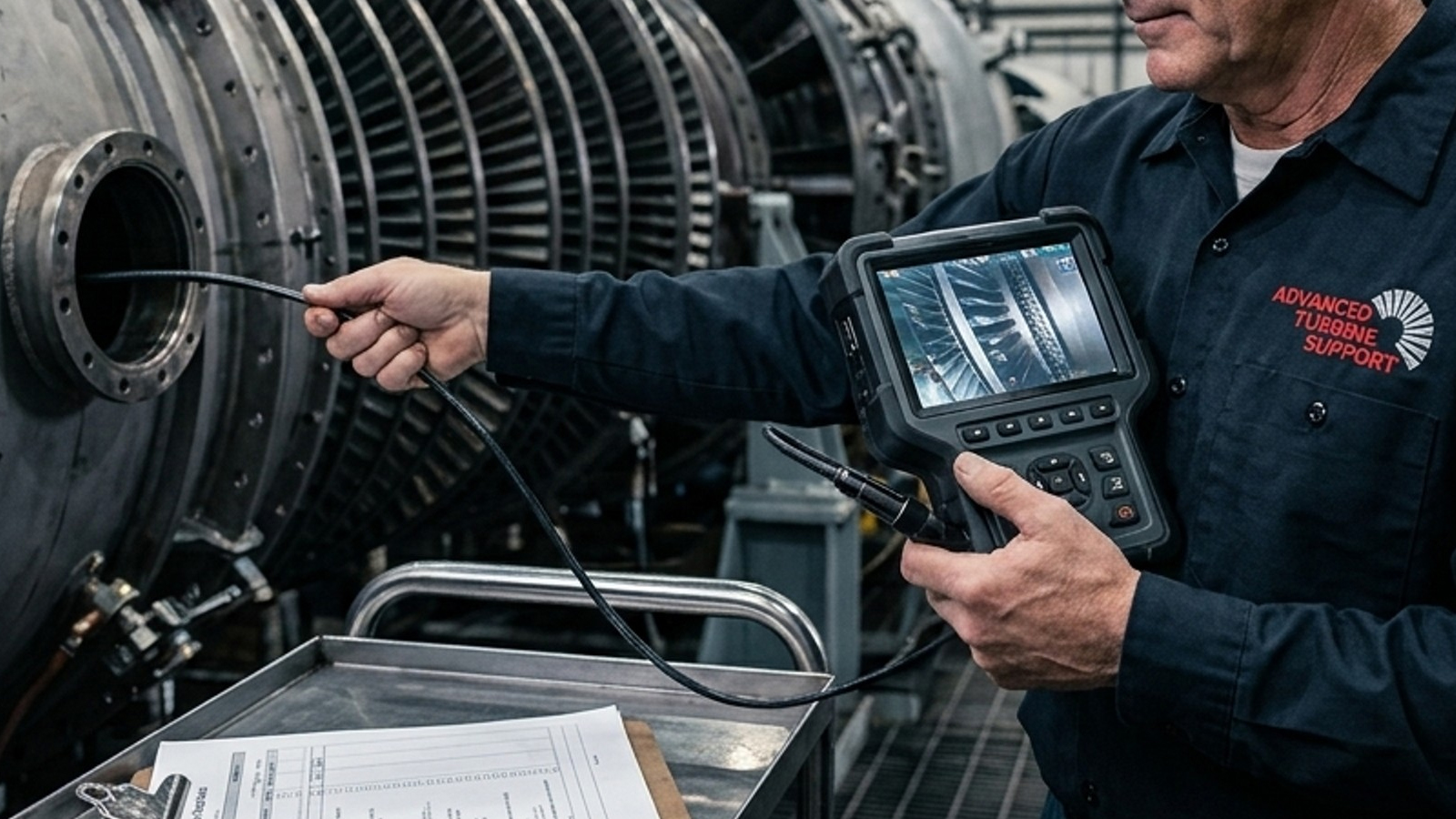
When finance asks why you need to spend money before an outage even starts, the answer is simple: a pre-outage borescope inspection uses a flexible fiber-optic camera to check internal turbine parts without taking them apart. It gives you documented proof of condition instead of an educated guess. We use these findings to define an accurate repair scope through our borescope inspection services. That way, parts, labor, and outage length get planned on facts, not guesses. Skip this step and you’re betting money and schedule on guesswork. The real condition only shows up once the casing is open, and by then it’s too late to order the right parts on time. The rest of this article shows how findings turn into a solid repair plan before a single bolt comes off.
Key Takeaways
- A pre-outage borescope inspection replaces guesswork with documented, measured proof of turbine condition before the casing is opened
- Findings let plant managers order long-lead parts and finalize labor scope weeks or months before the outage window closes
- Regular borescope inspections catch hot gas path wear, cracking, and erosion before they cause unplanned downtime or forced shutdowns
- Clear reporting, backed by photos and measurements, protects the outage budget from mid-teardown scope changes and cost overruns
Why Repair Scope Is Usually Wrong Without a Borescope Inspection
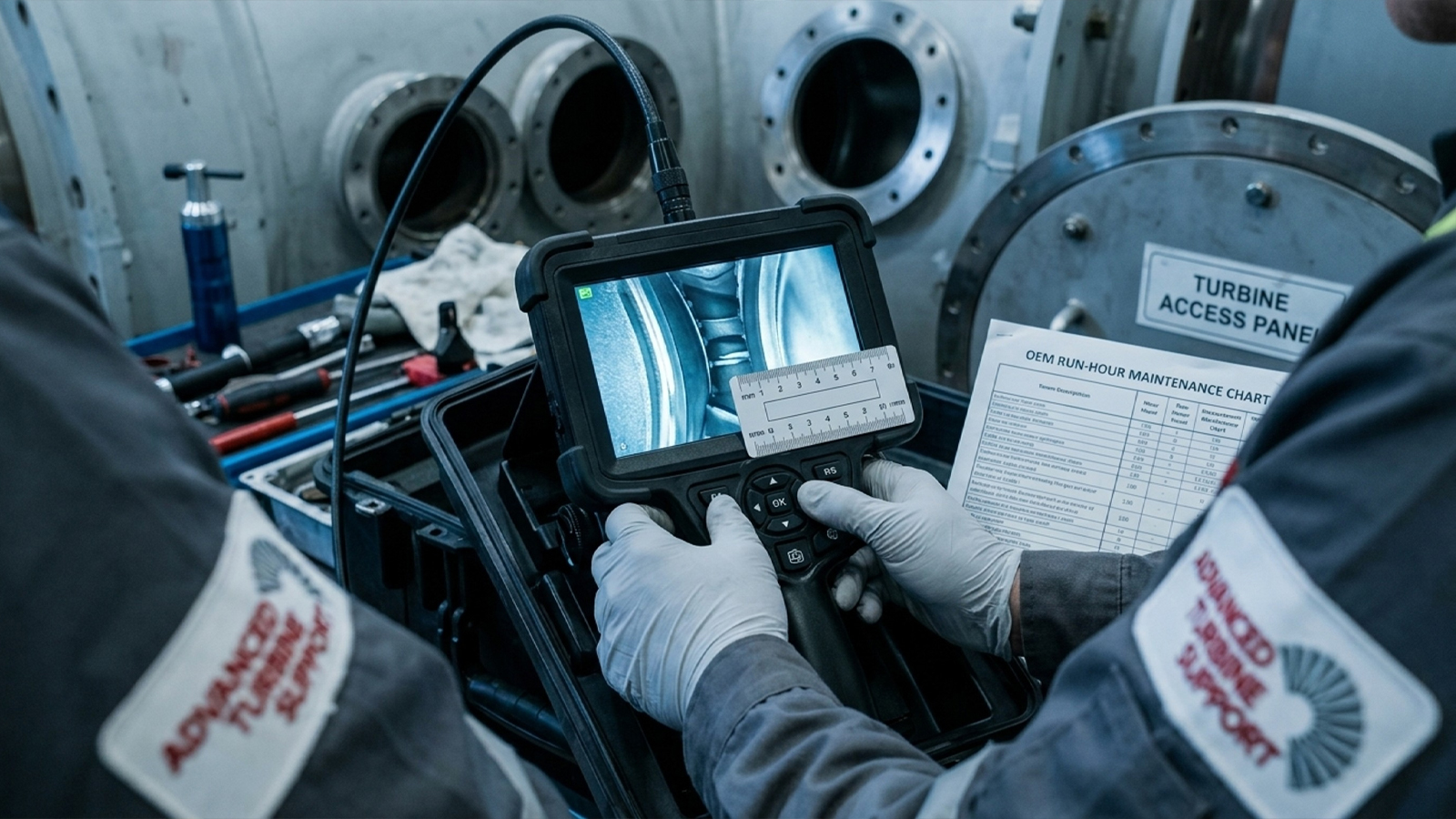
Repair scope built only from OEM run-hour intervals treats every unit the same way. But no two units are the same. Fuel quality, cycling frequency, load profile, and weather all wear a turbine down differently. A schedule based purely on fired hours misses that variation entirely. EPRI turbine maintenance guidelines support scoping repairs around actual condition, not calendar assumptions. This condition-based approach lets plant operators make repair decisions grounded in evidence rather than an arbitrary hours count. A condition based maintenance strategy also makes it easier to defend scope decisions to finance, since every repair or replacement ties back to a documented finding rather than a fixed interval. It’s the foundation of a proactive maintenance strategy rather than a reactive one. Two units with identical run-hours can reach an outage in wildly different mechanical shape.
The Cost of Guessing Scope from Run-Hours Alone
When scope is guessed instead of measured, the results are predictable. Parts get ordered on estimates, not evidence. Some turn out unnecessary. Others, the ones actually needed, never get ordered because nobody knew they were required until teardown. Then the operator is rushing freight, stretching the outage window, and explaining the overrun to finance.
How Teardown-and-Discover Findings Blow Up an Outage Schedule
Opening the casing without prior visual evidence is where schedules quietly fall apart. Finding a cracked liner or a rubbed blade tip mid-teardown means a new engineering review, a new parts order, and extra days tacked onto a shutdown that was supposed to be tightly scoped. Left unmanaged too long between outages, this same blind spot raises the risk of a failure or a forced shutdown well before the next planned outage. In the worst cases, that unaddressed defect can grow into a catastrophic failure that takes the unit offline entirely. Borescope inspections give plants a way to plan repairs ahead of time, instead of finding out what’s wrong once the unit is already down. Committing to regular inspections between major outages is what keeps that blind spot from forming in the first place. If you’re not sure where your unit stands on that timeline, that’s usually a good sign it’s worth a conversation before the outage date gets locked in.
What Does a Borescope Inspection Find Inside a Gas Turbine?
A borescope inspection reveals section-specific problems that run-hour logs can’t show. Using a borescope, a trained inspector can spot wear patterns, cracking, and coating breakdown in spots that would otherwise stay hidden until full disassembly.
Compressor Section Findings
Compressor blades and vanes get checked for erosion, pitting, corrosion, and foreign object damage, especially on the early stages where inlet debris does the most harm. A single pit on a leading edge might just be cosmetic. A cluster of them near the root can signal a fatigue risk worth flagging.
Combustor Section Findings
Combustor liners are checked for cracking, coating loss, and discoloration caused by hot spots or fuel nozzle problems. These are some of the most important findings on the whole unit. Combustion hardware failures tend to spread downstream into the hot gas path. Left unchecked, they can cause damage well beyond the combustor itself, and can occasionally lead to a catastrophic event if the defect goes undetected across multiple operating cycles.
Turbine Section and Rotor Findings
In the turbine section, inspectors look for blade tip rub, coating breakdown, blocked cooling holes, and rotor bore inspection findings, along with exhaust section wear built up over years of thermal cycling. Hot Gas Path parts see the worst damage of any section because they run at the highest sustained temperatures [1]. When a defect looks like it goes below the surface, Eddy Current Testing adds to the visual record on critical components. This gives engineers a subsurface crack reading a camera alone can’t provide. That’s especially useful during a full turbine inspection, when multiple stages are being checked at once.
The Scoping Process: From Borescope Findings to a Defined Repair Plan
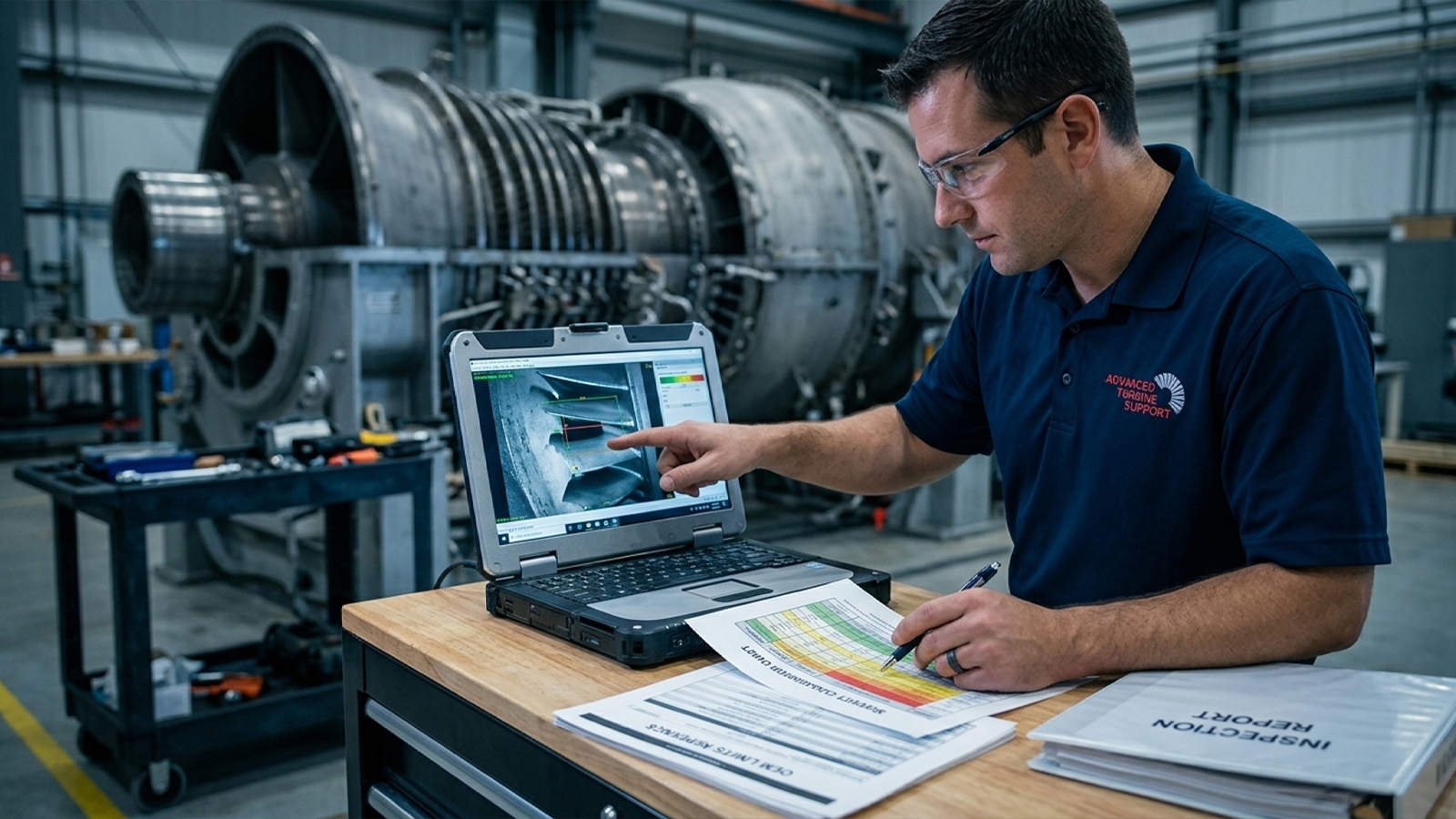
Turning borescope findings into an actual repair plan follows a set sequence, not a subjective walkthrough.
Step-by-Step: From Inspection to Repair Decision
- Pre-inspection data review: run-hours, prior Combustion Inspection or Hot Gas Path reports, and OEM technical information letters
- Access point planning: finding the correct borescope inspection covers and ports for each turbine type without opening more than needed
- Inspection execution: remote visual inspection tools capture high-resolution images and video of each stage
- Defect documentation and measurement: every finding is logged with location, size, and photo evidence
- Severity classification: measurements are checked against OEM published wear and clearance limits
From there, findings drive a decision based on condition: repair now, replace at this outage, or run to the next major inspection. A GE Frame 7FA compressor blade with pitting within OEM published limits, for instance, may be cleared to keep running. Pitting beyond that limit triggers replacement before the unit goes back into service. OEM inspection intervals differ across GE, Siemens, Solar Turbines, and MHPS platforms. That’s why unit-specific borescope findings matter more for maintenance decisions than a generic interval chart. It’s also why relying on regular borescope inspections between major inspections gives plant teams a proactive read on condition instead of a reactive scramble when problems surface unannounced.
Timing: When to Schedule Inspection Before Outage Day
Inspection should happen roughly 60 to 90 days before the outage window. That lead time lets long-lead parts be ordered and labor scope finalized before outage planning locks in, instead of scrambling once the unit is already down. If your outage date is already set and that window is tightening, it’s worth a quick call to see what’s still realistic.
Choosing a Borescope Inspection Provider: Diagnostics, Equipment, and Reporting
Not every provider delivers a report that engineering, ownership, or an OEM warranty reviewer can act on with confidence.
What a Clear Inspection Report Should Include
A usable report includes high-resolution imaging, precise measurements, severity ratings mapped to OEM limits, and a plain-language repair recommendation for each defect. Anything less forces the plant’s own team to reinterpret raw footage. That defeats the purpose of hiring an inspection team in the first place.
Certifications and Experience to Look For
Technicians should hold ASNT Level II or Level III certification and understand how their findings relate to the ASME Boiler and Pressure Vessel Code and broader NDT practice. Field experience across multiple OEM turbine platforms matters too, and so does the quality of the inspection equipment they bring to the job. Sharper imaging catches defects that lower-resolution tools miss. A technician who has only inspected one frame type has a narrower reference point for judging what’s normal wear and what’s a real defect. The best technicians inspect each stage methodically, rather than rushing through access points just to check a box.
| Evaluation Factor | Why It Matters |
|---|---|
| ASNT Level II/III certification | Confirms the technician can interpret NDT and ECT findings, not just capture images |
| Report clarity | Photos, measurements, and severity ratings must hold up under engineering review |
| Equipment resolution | Higher-resolution borescopes catch hairline cracking and early coating loss |
| Turnaround speed | Fast reporting preserves parts lead time before the outage window closes |
| Field experience across OEM platforms | Broader experience improves accuracy of severity classification |
We built our inspection process around these standards. On one recent 7FA unit, an operator wasn’t sure whether a suspected liner crack would require a full teardown. Our inspection team confirmed the defect’s location and severity in a single visit. That let the plant order the correct liner ahead of the outage instead of discovering the need mid-teardown. That kind of turnaround is the difference between an inspection plan that protects the schedule and one that just adds another report to the file. If you’re weighing a provider right now, that single-visit turnaround is a fair question to ask any team you’re considering, including us.
Conclusion: Schedule Your Pre-Outage Borescope Inspection
A defined repair scope protects three things at once: budget, schedule, and long-term reliability. There’s no upside to walking into an outage on assumptions when documented condition is available weeks ahead of time. Call us at (352) 332-4061 or schedule a consultation with Advanced Turbine Support before your outage plan is finalized, so the scope you commit to is the scope the turbine actually needs. No pressure either way, but if your outage window is approaching, sooner is easier to work with than later.
FAQ
How far in advance of an outage should a borescope inspection be scheduled?
A borescope inspection should be scheduled 60 to 90 days before a planned outage begins. That window gives plant managers enough time to order long-lead parts and finalize labor scope based on documented findings instead of assumptions. We prioritize fast scheduling specifically so that timeline doesn’t get squeezed by a late request.
Can a borescope inspection eliminate the need for a turbine teardown?
A borescope inspection can eliminate unnecessary disassembly for parts confirmed to be within OEM limits. Some sections may be cleared to run until the next interval based on documented condition alone. A final decision still requires trained interpretation, since not every defect can be seen or measured without deeper access.
What is the difference between a borescope inspection and a combustion inspection?
A borescope inspection is a diagnostic tool, while a Combustion Inspection (CI) is a scheduled maintenance event. Borescope findings often define the actual scope of a CI, telling the team which combustion hardware needs attention before the outage starts instead of guessing at the full extent of the work.
How much does a pre-outage borescope inspection cost compared to unplanned scope changes?
A pre-outage borescope inspection typically costs a small fraction of what an unplanned mid-outage scope change runs. Rushed part freight, added labor, and extra outage days from a teardown surprise routinely cost more than the inspection that would have caught the issue early.
What certifications should a borescope inspection technician have?
A borescope inspection technician should hold ASNT Level II or Level III certification. Knowing the ASME Boiler and Pressure Vessel Code and broader NDT methods also matters, since credentialed technicians produce reports that hold up under engineering and OEM warranty review.
What does a borescope inspection find inside a gas turbine?
A borescope inspection finds problems across the compressor, combustor, and turbine sections, including erosion, cracking, coating loss, and blade tip rub. The exact range of findings depends on unit history, fuel quality, and operating hours, which is why unit-specific inspection data matters more than generic assumptions.
How does a borescope inspection reduce unplanned downtime and protect outage budget?
A borescope inspection reduces unplanned downtime by catching defects early enough to plan repairs instead of reacting to a forced shutdown. Accurate, pre-ordered parts based on documented findings keep the outage budget from absorbing mid-teardown surprises. Scheduling a consultation early is the simplest way to put this protection in place before your next outage.
Next Posts
Pre-Outage Borescope Inspection: How to Define Repair Scope Before the Turbine Comes Apart
admin September 25, 2026
OEM vs. Independent Borescope Inspection Providers: What Plant Managers Should Compare
admin September 11, 2026
GE 7EA Compressor Borescope Inspection: Common Failure Modes, TILs & What Operators Should Look For
admin August 28, 2026